This-is-how-you-get-fooled-on-social-media
The "Fake Quality" Trap
.jpeg)
This-is-how-you-get-fooled-on-social-media
The "Fake Quality" Trap , Sep-02-2026
"This is how you get fooled on social media."
Every time you open Instagram or Facebook, you are stepping into a carefully constructed illusion. You scroll through short-form videos, each one promising a life-changing product, an unbeatable discount, or a luxury experience at a throwaway price.
Here is the cold truth: 8 out of 10 reels on your feed are lying to you.
They aren’t just trying to catch your attention—they are actively manipulating your perception of quality, price, and quantity. Welcome to the era of digital noise, where hyper-edited content and clever marketing tricks exist solely to separate you from your money.
Here is how the trick works, and how you can stop falling for it.
1. The "Fake Quality" Trap: Studio Lighting & Color Grading
That glowing skin care product, ultra-vibrant outfit, or mouth-watering dish looks flawless on camera for a reason. Creators and sellers use high-end studio lighting, ring lights, saturation filters, and specific camera angles to make low-grade items look premium.
When the package arrives at your doorstep, the vibrant crimson dress looks faded, the "heavy metal" watch feels like lightweight plastic, and the food spot turns out to be a cramped, unhygienic cloud kitchen. What you saw wasn't the actual product—it was color-graded fiction.
2. The "Fake Price" Trap: Synthetic Urgency & Phantom Discounts
"This Rs. 4,999 jacket is available for just Rs. 799 for the next 2 hours only!"
You’ve seen this caption a hundred times. This classic tactic relies on FOMO (Fear Of Missing Out) and artificial price anchoring. The product was never worth Rs. 4,999, nor was it ever sold at that price. The seller arbitrarily inflates the "original price" to make a low-quality Rs. 300 item look like a massive bargain at Rs. 799. You think you’re beating the system, but you’re paying double what the product is actually worth.
3. The "Fake Quantity" Trap: Forced Perspectives & Oversized Packaging
Reels excel at spatial deception. A bowl of food filmed with a macro lens up close looks like a feast fit for three people, but in reality, it's a tiny portion served on a saucer. Skincare containers are filmed to look deep and heavy, yet they feature double-walled plastic bottoms holding barely 10ml of product. The reel shows abundance; reality delivers a fraction of it.
How to Protect Yourself from Digital Noise
Before you click "Buy Now" on the next viral product, run it through these three sanity checks:
- Look for Unfiltered Customer Reviews: Never trust the comment section on the reel itself (sellers routinely delete negative comments). Search for the brand on independent review sites, Reddit, or consumer forums.
- Beware of "Gimmick Pricing": If an unknown website offers an elite item at an impossibly low price, it’s either a scam or cheap knock-off quality.
- Check the Return & Refund Policy: Fraudulent social media stores usually have vague return policies, no physical address, and non-functional customer service emails.
Don't Let Algorithms Drive Your Decisions
Social media algorithms are engineered to push high-dramatics over accuracy because outrage, surprise, and desire drive clicks. The next time a reel makes an offer sound too good to be true, pause for a second. Strip away the aesthetic background music, the studio lights, and the urgent captions.
Once you look past the digital noise, you’ll realize that most of it is just cheap noise wrapped in pretty packaging.
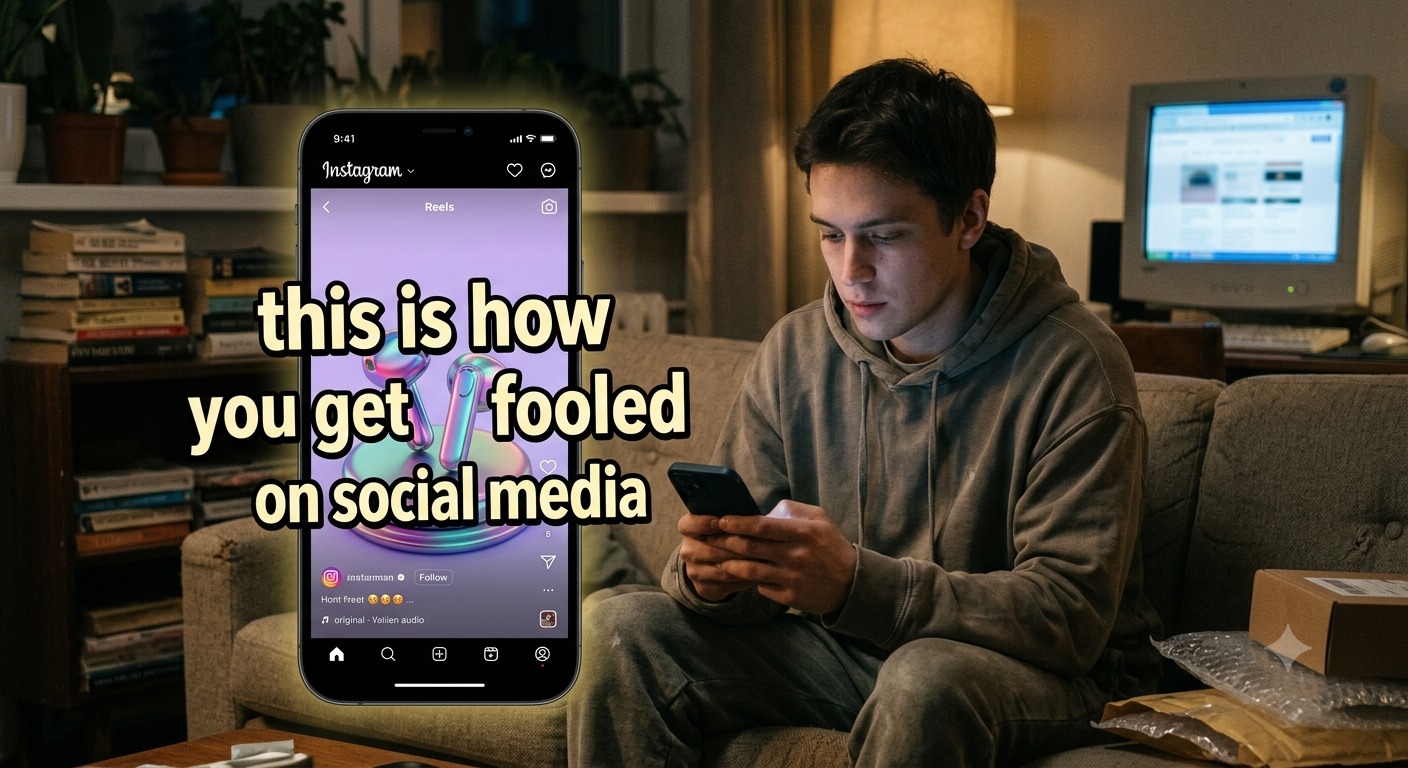
8 out of 10 reels lie about quality, price, and quantity. Don't get fooled by social media noise—learn how fake schemes trick you and stay safe.
Popular
- Digital Noise
- Social Media Scams
- Consumer Awareness
- Fake Online Traps
Shopeze.in
Shopeze.in
Aaja.in
Boost via Reels & Images
Learn Python
Learn Python By Gagan Khanna
Quick...
Professional Help for Growth
Tags
Digital Noise Social Media Scams Consumer Awareness Fake Online Traps