Reading-the-Label-Rethinking-Packaged-Food-Quality-in-India
Author- Divya Jain, Course- BBA Financial and Marketing Analytics, Institution- Christ University, Delhi NCR
Reading-the-Label-Rethinking-Packaged-Food-Quality-in-India
Author- Divya Jain, Course- BBA Financial and Marketing Analytics, Institution- Christ University, Delhi NCR , Aug-31-2026
INTRODUCTION
Walk into any supermarket
in India, and you will see products labelled “healthy,” “natural,” “pure,”
or “made with quality ingredients.” But how much of what we see on the
front of a packet tells us what is inside?
India’s packaged food
industry is growing rapidly. With busy lifestyles, urbanization and changing
eating habits, packaged food has become a normal part of everyday life. But
this growth also raises an important question: are companies focusing on
producing better food, or simply cheaper food?
The growth of the
packaged food industry connects directly with Sustainable Development Goal
12 — Responsible Consumption and Production. It is about producing and
consuming products in a way that uses resources responsibly and reduces
unnecessary harm.
However, when companies
try to keep products affordable, quality can sometimes become the easiest thing
to compromise. Cheaper ingredients may replace better ones, sugar and salt can
be used to improve taste at low cost, and preservatives keep products on
shelves for longer.
These practices are not considered
illegal, which makes this issue much more complicated. A product can
technically meet the required standards while still raising questions about its
nutritional quality, transparency or overall value to consumers.
In India, the Food
Safety and Standards Authority of India (FSSAI) regulates food safety and
standards. It sets rules for food products, licensing, safety limits and
labelling.
The problem is not
necessarily the absence of rules. It is the gap between having regulations
and enforcing them consistently.
A few problems are
particularly important
- Limited testing:
India has an enormous number of food products and manufacturers, making
regular testing and inspection difficult.
- Confusing marketing:
Words such as “natural,” “healthy,” or “immunity-boosting”
can create a healthier impression, but the food packaging companies add in
much smaller font that the word is only used for advertising.
- Low consumer awareness:
Many people look at the front of a packet but do not check the ingredient
list or nutrition table.
- Reactive enforcement:
In some cases, problems receive attention only after complaints,
investigations or public pressure.
This does not mean that
every packaged food product is unsafe or that every company is misleading
consumers. The larger issue is that consumers should not have to become food
experts just to understand what they are buying.
Responsible production
does not mean eliminating packaged food or going back to traditional methods of
production. It means making the manufacturing process more transparent and
responsible.
Some companies are
already responding to increasing consumer awareness, but this needs to become
more common across the industry.
Consumers Also Have a
Role
Regulation alone cannot
solve the problem. Consumers have considerable influence through what they
choose to buy.
A simple habit can make a
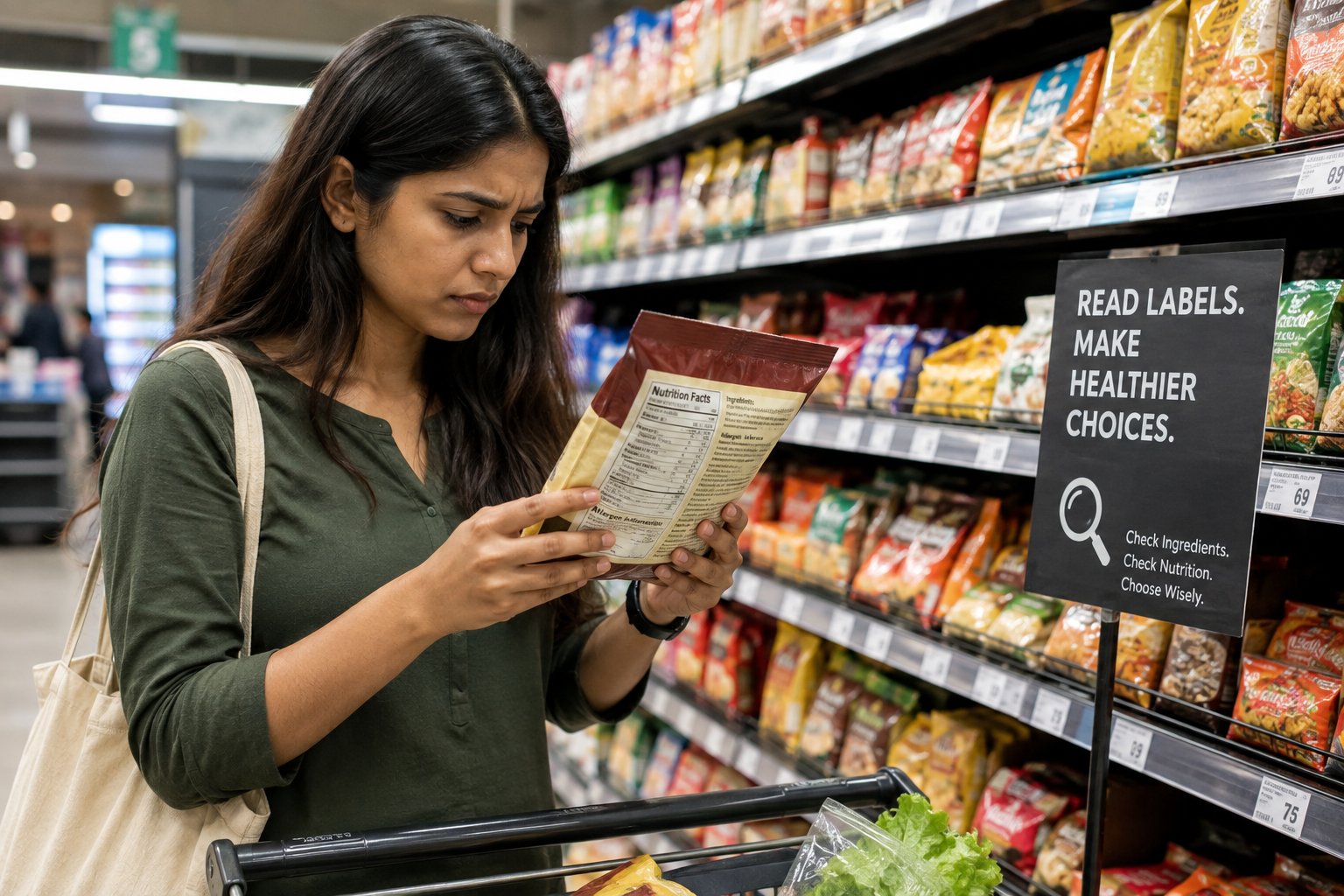
difference: turn the packet around.
Instead of looking only
at the front of the package, consumers should check:
- The ingredient list.
- The amount of added sugar, salt and
fat.
- The order in which ingredients are
listed.
- Serving size and actual nutritional
values.
- Claims such as “natural,”
“sugar-free,” or “healthy.”
This does not mean being
afraid of every additive or avoiding packaged food completely. It simply means deciding
based on information rather than advertising.
From Cheap Production to
Responsible Production
SDG 12 is ultimately
about changing the way we think about both production and consumption.
Manufacturers need to take greater responsibility for the quality of their
products. Regulators need to ensure that existing standards are properly
enforced. Consumers need to become more aware of what they are purchasing.
The solution is not to
blame one company or one institution. It is to raise the standard expected by
everyone involved.
A packet may look healthy
because of its colors, claims and packaging. But the real story is usually
written on the back.
Responsible consumption
can start with something as simple as reading the label before putting the
product in the shopping cart.
India’s packaged food industry is growing rapidly, but misleading labels, quality concerns and weak enforcement raise questions about responsible production and consumption.
Popular
- Packaged Foods
- Food Safety
- Responsible Consumption
- FSSAI
Shopeze.in
Boost via Reels & Images
Learn Python By Gagan Khanna
Professional Help for Growth
Tags
Packaged Foods Food Safety Responsible Consumption Responsible Production SDG 12 Food Regulations FSSAI