Practice SQL Queries On Having Clause
Having Cluse In SQL Queries
Practice SQL Queries On Having Clause
Having Cluse In SQL Queries , Oct-10-2026
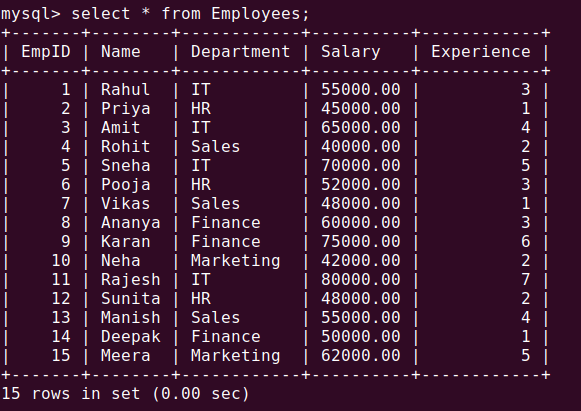
Practice Question 1: Filtering by Average Salary
55,000. Display the department name and its average salary.Solution
SELECT Department, AVG(Salary) AS AvgSalary
FROM Employees
GROUP BY Department
HAVING AVG(Salary) > 55000;
Explanation
GROUP BY Department: Groups the rows in the table by each unique department (
We use the HAVING clause because the WHERE clause cannot filter aggregate functions (like SUM, AVG, COUNT, MAX, or MIN). When you group data together, you often need to set a condition on the summary result of those groups rather than on the individual rows. That is exactly what HAVING is designed for. Order of Execution in SQL Understanding the sequence helps clarify why both clauses coexist: FROM: Gathers the raw table data. WHERE: Filters individual rows (e.g., WHERE Experience > 1). GROUP BY: Packs the remaining rows into groups. HAVING: Filters the groups based on aggregate results (e.g., HAVING COUNT(*) > 3). SELECT: Chooses what columns to display. ORDER BY: Sorts the final output.
Popular Keywords
-
Difference Between Where And Having Clause In SQL Queries
-
What Is Group By Clause In SQL Query
-
Where Should We Use Having Clause In SQL
-
What Are Aggregate Functions In SQL
Tags
Difference Between Where And Having Clause In SQL Queries What Is Group By Clause In SQL Query Where Should We Use Having Clause In SQL What Are Aggregate Functions In SQL